Online Ireland Travel Guide

| HOME | ABOUT | IRELAND TRAVEL GUIDE | COUNTY TRAVEL GUIDES | 360 VIRTUAL TOURS | THEME MAPS | PICTURES | GENEALOGY | IRELAND GOLF |
Your online Ireland Travel Guide, we hope you enjoy our Map of Ireland and use it to plan your vacations in Ireland.
For you who many never get the chance to visit then we invite you to take a virtual tour of our beautiful island.
4 stars hotels in Dublin


We have a wide variety of information on Ireland from themed maps, county maps, pictures, genealogy, history. Use the drop down menus above to find the particular page that you require. Join us on Facebook or leave a comment, we look forward to hearing from you!
Maps of Ireland
Maps of Ireland: Discover six fabulous virtual interactive themed maps of Ireland covering famous heritage sights, castles, the most scenic attractions, Celtic Ireland, the Counties of Ireland, the Aran Islands and more. An absolute mine of information for the person who wants to travel to Ireland.
Ireland Counties
Ireland Counties: A fascinating exploration of every one of the 32 counties of Ireland. Discover the most scenic and important heritage sights in your county of choice. These maps help you plan your trip without the need for a travel agent.
Ireland Castles
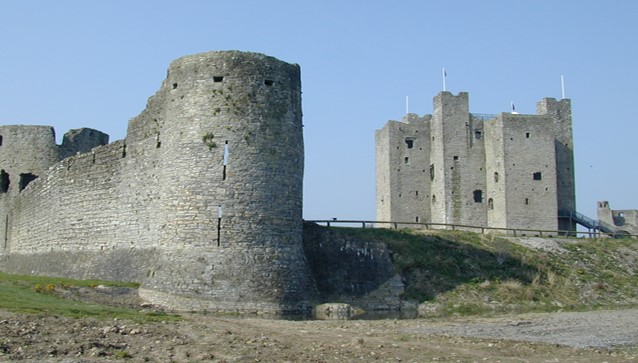
Ireland Castles: Discover the ancient ruins of historic Irish Castles scattered across the country.
We hope you enjoy our Map of Ireland and use it to plan your vacations in Ireland. For you who many never get the chance to visit then we invite you to take a virtual tour of our beautiful island. We have a wide variety of information on Ireland from themed maps, county maps, pictures, genealogy, history. Use the drop down menus above to find the particular page that you require. Join us on Facebook or leave a comment, we look forward to hearing from you!
Look Around Ireland is website dedicated to give users from both at home and abroad a virtual tour of Ireland using the latest technology such as interactive 360 degree images. The website has taken a number of years to create and is always an ongoing project of improvement.
Each county is treated equally with no bias towards the more familiar “tourist counties”
The locations contained within the site are a mixture of well known sites and some are hidden secrets.
USA: During the summer of 2003 Look Around Ireland was invited to the Milwaukee Irish Festival WI, USA to “show off Ireland” in their Culture Tent and they were also asked to judge the Irish photo competition. More Info
Youtube: Look Around Ireland where given permission from Michael Londra (lead singer of Riverdance on Broadway) to combine his tenor voice with their images of Ireland. A youtube channel was created and it boasts being among one othe the most favoured channels in the Travel and Events section globally. The Danny Boy video has had over 4 million views from viewers all over the world. Click here for Youtube Channel
Facebook: Look Around Ireland can also be found on the popular social networking site Facebook. A great way to interact with users and currently there are over 3000 fans on Facebook to our Look Around Ireland page. Click here for Facebook Channel
Enjoy the memories of Ireland !
3 stars hotels in Dublin


Seamus Kirk TD, John McKeown, Noel Dempsey TD, Seamus Maguire
The above picture shows Noel Dempsey (the then Irish Minister for Health
Top Tourist Attractions of Ireland
How does one list the top tourist attractions of Ireland? There are so many and even the impartial choice still tends to be somewhat subjective. There is such a range of different attractions to choose from heritage to scenery, culture and archaeology that any list will produce an argument and valid counter-proposals.
Family hotels in Dublin


The following is not in any particular order and by its very nature is limited. It represents 10 visitor attractions on the Island of Ireland to be included on any trip or itinerary. There are dozens more that could be on it and the easiest way to source further attractions is to go our Ireland Maps section and compile your own personal list.
Cliffs of Moher
This magnificent natural wonder is located on the coast of County Clare. The Cliffs of Moher offers a stunning vista of outstanding natural architecture.
Click here to find out more about the Cliffs of Moher.
Killarney
Located in the centre of County Kerry, Killarney lays substantial claim to being the tourist capital of Ireland. Magnificent mountains, glistening lakes, islands, castles and amenities of every description are here.
Click here to find out more about Killarney.
Connemara
This is another natural wonder that amazes the visitor with the breadth of choice in sightseeing. Located in west County Galway and a small part of County Mayo.
Click here to find out more about Connemara.
Newgrange
Situated in the lovely Boyne Valley in County Meath, Newgrange predates the Pyramids of Egypt and Stonehenge and is one of the great wonders of the ancient world.
Click here to find out more about Newgrange.
Guinness Storehouse
This is the Interpretative Centre for Guinness stout, the most famous drink in the world and is located beside the actual brewery in Dublin.
Click here to find out more about the Guinness Storehouse.
Best budget hotels in Dublin


Blarney Stone
This attraction is situated within the grounds of Blarney Castle, County Cork. Kissing the Blarney Stone is reputed to give one the “gift of the gab” which is the ability to talk charmingly and persuasively.
Click here to find out more about the Blarney Stone.
Giants Causeway
This is an amazing ancient geological stone formation on the North Coast of County Antrim. The Giants Causeway is a UNESCO site.
Click here to find out more about the Giants Causeway.
Ring of Kerry
This is breathtaking magnificent tour of the sights of County Kerry commencing and ending in Killarney.
Click here to find out more about the Ring of Kerry.
The Burren
Located in North County Clare, The Burren is a geological wonder of rugged lunar type landscape unique in Ireland.
Click here to find out more about the Burren.
Book of Kells/Trinity College
The Book of Kells is an awesome artistic production of the tales of the Bible created by the ancient monks of Ireland and is located in Trinity College Dublin.
Click here to find out more about the Book of Kells.
Dublin Spire
Use your mouse to look around
You control the picture
Popular Hotels in Dublin


Name The Dublin Spire County Dublin About
O’Connell street is the main street in Dublin. Here you will find many statues and monuments to famous historic Irish men such as Jim Larkin, Daniel O’Connell, William O’Brien , etc. Also on O’Connell street is the GPO and the recently erected Spire. This was built over Dec 2002 and Jan 2003.
Many people have various opinions on whether it is a statement of how modern Ireland has become or whether it was a waste of tax payers money – love to debate on such important issues !!